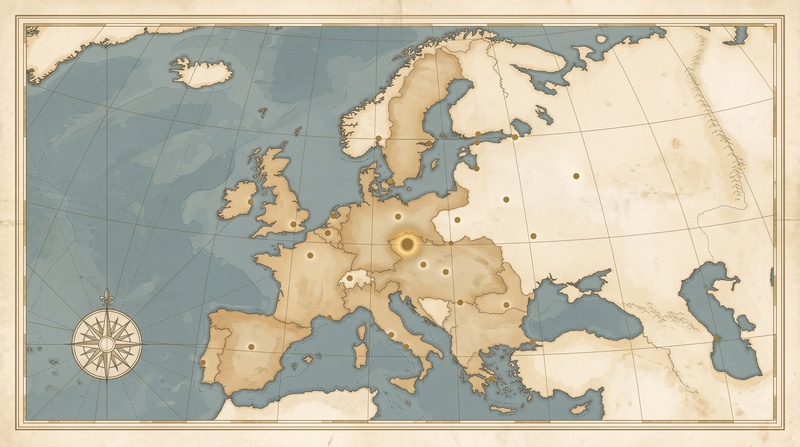
The wellness market analysis a franchisee actually needs – not the consultant version
When an investor reads "European wellness market – $1.5 trillion," the number is too big to help them decide anything. A more useful question: which slice of that market is actually addressable for a company running one 150 m² location with €250,000 of upfront capital? This piece answers exactly that – for a prospective Lázně Pramen franchisee, or for an investor comparing wellness against other sectors.
The numbers below aren't marketing. They come from Global Wellness Institute, McKinsey and Statista, plus our own operating data from three Prague locations, six years of trading and more than 100,000 guests served.
Real numbers, broken down by segment
The global wellness economy, per Global Wellness Institute Monitor 2024, sits at $6.3 trillion (2023 data). McKinsey's narrower consumer wellness definition puts it at $1.8 trillion. Europe is the second-largest region after North America – roughly $1.5 trillion on the broad definition.
Those are the headline numbers. For a franchisee, the relevant breakdown looks like this:
- Wellness tourism + spa + thermal bathing in Europe – roughly $229 bn annually (GWI). This is the segment Lázně Pramen actually competes in.
- European spa industry, strictly defined – around $60 bn, growing at 6–8 % CAGR.
- Beer spa as a niche – estimated at €15–25 m annually in the Czech Republic alone (our own mapping of 25+ operators, average revenue). Early-stage in Poland, Germany and Austria. Effectively zero penetration in the rest of Europe.
- Czech wellness market overall – €2–3 bn per Statista and European Spa Association reports.
Takeaway #1: the market Lázně Pramen plays in is wide enough to absorb hundreds of additional locations, and narrow enough that there's no direct competitor of the Marriott Spa class.
Niche vs mass wellness: where a franchisee has a real shot
McKinsey splits wellness into six macro-categories: health, fitness, nutrition, appearance, sleep and mindfulness. Only a few of these are practically addressable for a single-site franchisee. The large ones (fitness chains, supplement brands, beauty retailers) are dominated by global players running €10 m+ marketing budgets.
What is addressable: experience-led wellness – the "treatment + experience + story" format. Beer & Wine Spa sits squarely in this segment. The brewing and winemaking heritage of the Czech Republic (and Europe more broadly) gives the concept an authentic narrative that no global brand can copy.
Concretely: per GWI, 78 % of international tourists in Europe actively seek "authentic local experience" over generic spa. Prague pulls roughly 7 million foreign tourists a year. Even 1 % of that pool is enough demand to fill 10+ Lázně Pramen locations in a single city.
The competitive landscape: who you're up against, and who you aren't
Hotel wellness is saturated. Per European Spa Association, Europe runs more than 12,000 hotel wellness centers. They compete through OTA platforms (Booking, Expedia) that take 15–20 % commissions. Operating margins sit in the low double digits.
Standalone wellness (boutique spa, cryotherapy, salt caves, beer & wine spa) runs higher margins because:
- no dependency on OTA hotel platforms – traffic comes through proprietary booking systems;
- pricing isn't benchmarked against a "room + free spa" hotel bundle;
- premium positioning holds €60–80 per 90-minute session per guest.
Beer and wine spa as a category: roughly 80–120 independent operators across Europe (our mapping), a few micro-chains (Chodovar, Bernard), and exactly one standardized franchise network with a full design package, central supply chain and proprietary SaaS – Lázně Pramen. That's the strategic position a franchisee is actually buying into.
Where the real opportunity sits for a franchisee
Where to open a new location, specifically. Our internal demand analysis and competitive benchmarking surface these candidates:
- Cities of 200k+ population with no existing beer spa concept – around 150 of them across the EU. Most outside the top tourist tier (Leipzig, Wrocław, Graz, Bilbao).
- Second-tier tourist cities – Brno, Gdańsk, Salzburg, Bordeaux. Better CAPEX-to-revenue ratio than capitals (lower rent, comparable tourist demand).
- B2B channel – at the Dejvická flagship, corporate team-building and wine-tasting events account for 30–40 % of revenue. Most new operators underprice or ignore this line entirely.
- 85 % customer return rate within 12 months – the strongest LTV driver in the category. Standard hotel spa runs 25–35 %.
In practice: a new four-room location in a city of 250–500k with a tourism base hits break-even between months 14 and 22. We send a detailed business case for a specific city on request – drop us a line.
Risks and constraints – honestly
Wellness isn't a risk-free sector. Three risks a franchisee has to own up front:
- Regulation. Beer in a bathing tub triggers food-licensing requirements in some jurisdictions. Bathing water hygiene rules are clear in the Czech Republic, Poland and Germany; stricter in France and Italy. For a new location this adds 2–4 months of regulatory lead time.
- Seasonality. Peaks November–February and May–June; troughs July–August and February–April are 25–35 % below average. Cash-flow modelling has to bake this curve in from day one.
- Energy cost. Heating a 1,000 L tub to 35–38 °C costs €1.2–1.8 per operating hour at current energy prices. Eight operating hours × four rooms = €40–60 per day on water heating alone.
Lázně Pramen mitigates these through central supply chain, seasonal marketing playbooks and energy-efficient heat-pump specs baked into the design package. Detail in the investor section.
Where the market is heading, 2026–2030
GWI's latest Monitor forecasts a 7.3 % CAGR for the global wellness economy through 2027. McKinsey flags experience-led wellness as the faster-growing sub-segment (double-digit growth) versus products-led wellness (single-digit).
Three trends specifically pulling the beer & wine spa niche forward:
- ESG pressure from regulators – preference for local supply chains and natural ingredients. Saaz hops, oak from Czech forests and Bernard beer have been at the core of the concept from day one.
- Gen Z as a new wellness cohort – heavy preference for "experience over goods" (Statista 2024). Lázně Pramen is a 100 % experience format with no product e-commerce dependency.
- Wellness tourism growth – GWI forecasts +12 % CAGR for European wellness tourism through 2027.
For a franchisee, this means entering now captures the next decade of growth, not its tail end.
How Lázně Pramen captures this market
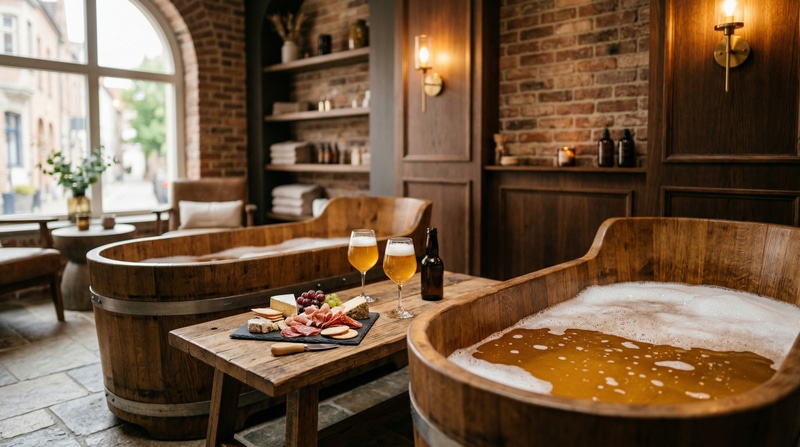
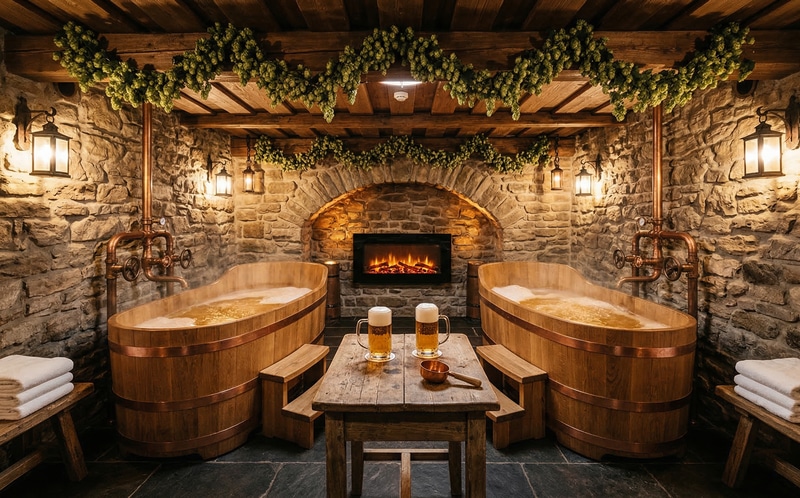
Lázně Pramen runs three locations in Prague and expands via franchise. The flagship Dejvická – 150 m², four private rooms (Zlatý, Rubínový, Smaragdový, Safírový pramen). Hand-built 1,000 L oak and larch tubs, Saaz hops and Bernard beer as ingredients.
The €250,000 franchise package (€50,000 fee + €200,000+ build-out) includes:
- architectural documentation and design package;
- central supply chain (tubs, ingredients, equipment);
- SaaS booking system and CRM;
- marketing playbook and B2B sales toolkit;
- project oversight and on-site checks during construction.
EBITDA margin at the flagship runs 30 %+, payback on initial investment 18–24 months, network-wide rating 4.8/5 on Tripadvisor.
If you want to work through a concrete budget and P&L for your city, contact us – we'll send a detailed business case with CAPEX broken down across 12 categories and a three-year cash-flow projection.
Sources
- Global Wellness Institute – Global Wellness Economy Monitor 2024 – globalwellnessinstitute.org
- McKinsey & Company – The trends defining the $1.8 trillion global wellness market – mckinsey.com
- Statista – Spa & wellness industry market data – statista.com
- European Spa Association (ESPA) – Industry data and standards – europeanspas.eu
- International Franchise Association – Franchise Economic Outlook – franchise.org