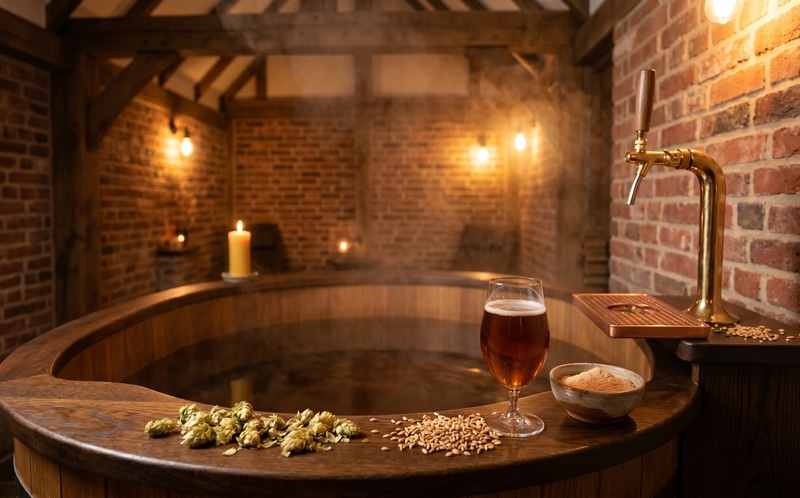
A quiet renaissance of beer baths
Beer baths have stopped being a regional curiosity. From a small handful of operators in Central Europe, the format has grown over the past decade into a wellness segment of its own, with hundreds of venues across Europe - from Czechia through Austria and Bavaria to Poland and the Baltics. The global wellness economy, according to the Global Wellness Institute, has consistently exceeded USD 6 trillion per year in the most recent reports.
Why beer baths in particular? For the guest, it is an authentic ritual built around a warm bath, regional ingredients and quiet time. For the operator, it is a segment with reasonably predictable economics: lower CAPEX than classical thermal spas, higher margins than standard wellness, and a strong story that makes marketing easier. Networks such as Lázně Pramen are built on combining the two - a high-quality guest experience and a transferable operating model.
What you actually bathe in
A beer bath is not soaking in pub beer. In serious operations it is a warm bath at roughly 33-37 °C, into which a concentrate of hop extract, brewer's yeast, malt extract and warm spring water is dosed. The guest is exposed to a mix of genuinely active substances from brewing raw materials - without alcohol, which does not belong in the bath itself.
The warm bath also matters in its own right: 15-20 minutes in warm water is physiologically comparable to a short thermal procedure. A heated wheat-straw bed or a relaxation lounge afterwards extends the effect. The body gets warmth, the guests get quiet time, and both have well-documented benefits.
Hops (Humulus lupulus) and a calming effect
Hops have been known in Europe for centuries as a medicinal plant; in phytotherapy hop cones are traditionally used for restlessness and sleep difficulties. Modern pharmacological reviews (such as Zanoli and Zavatti in the Journal of Ethnopharmacology) confirm that the bitter acids humulone and lupulone, together with prenylflavonoids, are believed to interact with the GABAergic system and contribute to a sedative and anxiolytic effect.
A beer bath does not deliver a therapeutic dose comparable to a supplement. The effect comes from the combination of warmth, breathing, scent and a short ritual. Even so, hops in the water play a real aromatic and dermal role: their essential oils and bitter resins act on the skin in a gently antiseptic and astringent way. That is a credible benefit, not marketing.
Brewer's yeast, polyphenols and B vitamins for skin
The second key ingredient is brewer's yeast (Saccharomyces cerevisiae). Rich in B vitamins, β-glucans and amino acids, it has long been a respected raw material in cosmetics. Topical applications of yeast-derived β-glucans are linked in the literature to improved hydration, tone and barrier support; the journal Cosmetics (MDPI) provides solid review material on this.
The third building block is polyphenols from hops and malt (xanthohumol, ferulic acid and others). The U.S. National Library of Medicine (NCBI/PubMed) holds extensive literature on the antioxidant action of polyphenols on the skin. A beer bath therefore really does deliver an interesting mix of beneficial substances to the skin - in a dose far below medical, but enough for a pleasant cosmetic effect.
Warm bathing before sleep and sleep quality
One of the best-documented benefits a beer bath can claim is not actually about beer. A warm bath 1-2 hours before bedtime supports thermoregulation and helps with falling asleep. The meta-analysis by Haghayegh et al. (Sleep Medicine Reviews, 2019) summarised 17 studies and showed that a warm water procedure roughly 90 minutes before bedtime can improve sleep onset latency and sleep quality.
Two implications follow for beer spas. First, even without any ‘magic' ingredients, a beer bath in the late afternoon or evening is a real tool against poor sleep. Second, operators can communicate this benefit honestly - with a meta-analysis behind them, not marketing slogans. Our blog regularly returns to the topic of sleep in spa context.
Lázně Pramen in Prague: two faces of beer baths
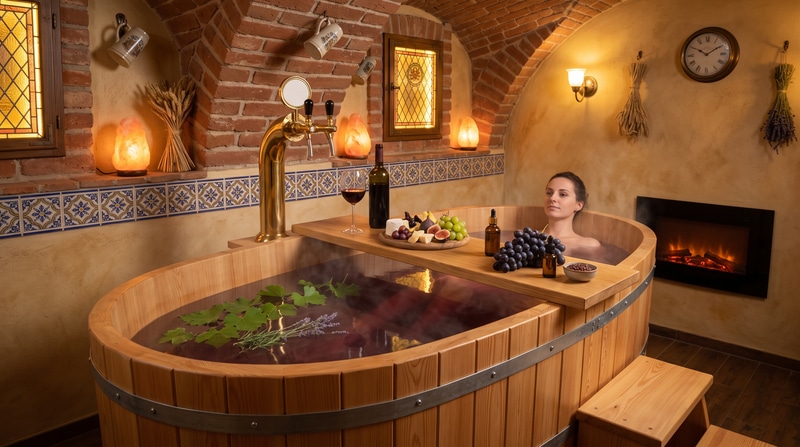
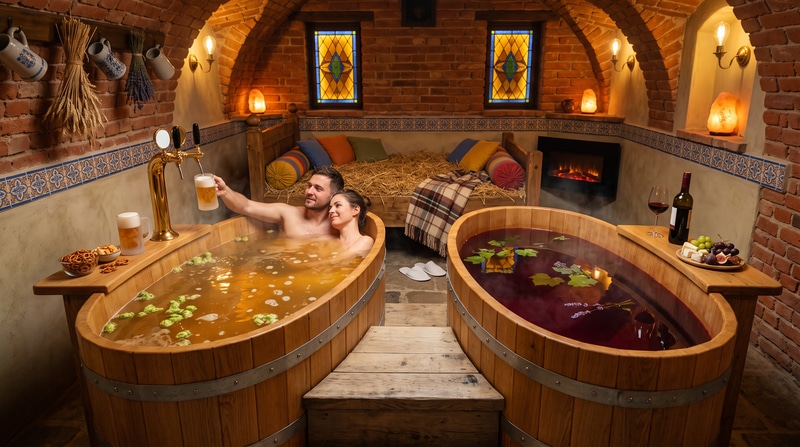
The Lázně Pramen network operates two locations in Prague with deliberately different character. Lázně Pramen Legerova is built for groups and corporate wellness: steel tubs, larger halls, more energetic atmosphere. Lázně Pramen Dejvická plays the private card - hand-built oak and larch tubs, calm atmosphere and wellness for two. Both venues are listed in the Our locations section.
These two settings are not random - they are at the heart of the concept. Same recipe, same raw materials, same health benefits. What differs is who comes, with whom and why. For an investor or future franchisee this is essential information: a beer spa can run in multiple operating models and still stay within one strong brand.
Beer wellness as a growing European segment
The map of European beer spas has filled out visibly in recent years. Czechia remains the largest market by number of venues, Austria and Bavaria run the second densest network, and Poland, Slovakia and the Baltics are growing fast. Beer baths are also gaining ground in Italy, France and Scandinavia as an extension of breweries and boutique hotels.
The supporting trends are stable: growing demand for short wellness stays, interest in local and fermented ingredients, and a shift toward experiential gastronomy and wellness under one roof. The Wellness Economy Monitor by the Global Wellness Institute documents these directions regularly. Beer baths are moving from a national specialty to a European spa standard.
Open your own beer spa: franchising and investment
Beer spas today are not an enthusiast's risk - they are a verifiable business with data. Lázně Pramen provides interested parties with a complete franchising package: technology, tub and interior design, bath recipe, operating procedures, staff training and marketing. The aim is an operation that becomes self-sufficient within a few months and is financially comparable to successful network locations.
For investors looking for exposure to the European wellness segment, the Lázně Pramen network combines a strong brand, a proven unit and a relatively low CAPEX per location. If you are considering your own venue or an investment, please use the contact form - we will respond to a specific situation, not a generic pitch.
Sources
- Haghayegh, S. et al. (2019). Sleep Medicine Reviews - warm bathing and sleep quality - pubmed.ncbi.nlm.nih.gov
- Zanoli, P. & Zavatti, M. (2008). Pharmacology of Humulus lupulus. J. Ethnopharmacology - pubmed.ncbi.nlm.nih.gov
- Yeast β-glucans in skincare - Cosmetics journal, MDPI - www.mdpi.com
- Polyphenols and skin antioxidant activity - NCBI / PubMed - pubmed.ncbi.nlm.nih.gov
- Global Wellness Institute - Wellness Economy Monitor - globalwellnessinstitute.org