Why the first year decides everything
The first twelve months of operation are the stretch that determines whether a new location becomes a stable business or whether early enthusiasm curdles into a daily struggle over cash flow. No prospectus can skip this phase, and no amount of ambition can rush it. The track record of Lázně Pramen, a brand that opened in Prague back in 2007, makes one thing plain: the success of a new venue is not forged on opening day. It is forged in the months leading up to it, and in the discipline of the months that follow.
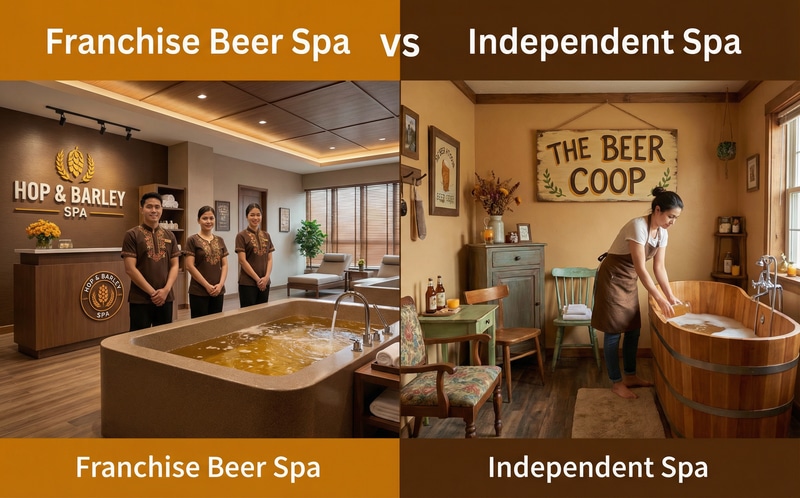
It helps to be clear about what a franchise is not. It is not a shortcut that relieves the owner of entrepreneurial responsibility. It hands you a proven concept, a brand, training, and operational know-how - but the hard work of opening a site, renovating the space, hiring and leading a team, falls to the franchisee every single time. The franchise model shortens the learning curve and cuts the number of expensive mistakes. It does not reduce the effort. Anyone who enters year one expecting passive income will be disappointed.
Franchising is often credited with better survival odds, but the research is mixed - some studies find that franchised start-ups fare no better than independent ones. Whatever advantage there is does not come automatically. It comes from the franchisee following the tested playbook and resisting the urge to improvise during a period when there is neither the room nor the capital for experiments. The aim of this guide is therefore to describe the first year honestly: what must happen before opening, how to budget for the months when running costs accrue before the booking calendar fills, and what expectations are realistic. We will not promise rapid returns or invent a monthly revenue curve. We will talk about the work, and about the numbers we actually publish.
From signature to opening: the timeline of the early months
The journey from signing the franchise agreement to welcoming your first guest takes roughly six months with the Lázně Pramen concept. Treat that window as a project in its own right, with its own budget, schedule, and lines of responsibility. If one phase slips, the whole chain slips with it - and every extra month means cost without matching income. That is exactly why sticking to a realistic plan matters, rather than betting that everything will come together at the last minute.
The broad sequence of steps looks like this:
- selecting and securing the location - a space of at least 150 m² in a tourist district or city centre, connected to water and sewage, with the brand's team helping you search;
- design work and construction planning for the renovation, including plumbing, drainage, and the tub technology;
- the renovation itself and the installation of handmade oak and larch bathing tubs;
- hiring and a two-week training programme for a team of four to six people;
- setting up supply relationships for ingredients and beverages;
- launching local marketing and pre-selling vouchers ahead of opening;
- trial operation and inspection, followed by the grand opening.
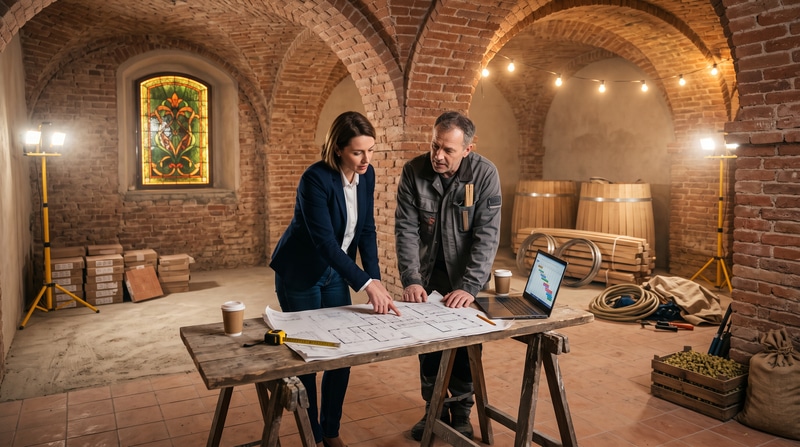
The single biggest mistake new franchisees make is underestimating the construction phase. Converting a cellar or ground-floor space into a spa, with tubs holding around a thousand litres and a working water temperature of 35-38 °C, is technically demanding: it calls for correctly sized heating, ventilation, and moisture extraction. Delays in design or trades are the most common reason an opening gets pushed back by weeks. We therefore recommend building in a time buffer and working closely with the brand's team, who will guide you through the whole process. Lock in your specific dates and milestones at your opening consultation, so you have a clear schedule from day one.
Location and renovation: where quality is decided
The site and its conversion are the first big decision, and they shape everything that follows. The minimum requirement is 150 m² in a tourist district or city centre with water and sewage connections - and that figure is not red tape. Beer and wine spas need room not only for the tubs themselves but for back-of-house, changing areas, a relaxation zone, and the plant that keeps it all running. A space that is too small cannot be run to standard, and over time it takes its toll on guest satisfaction and on revenue capacity alike.
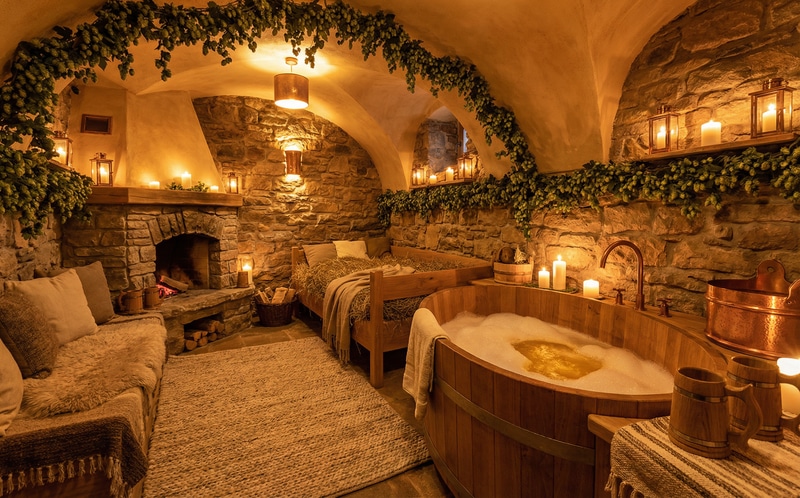
The Prague flagship at Dejvická 255/18 in Prague 6, open since 2008, shows how the character of a space can become a genuine competitive advantage. A cellar setting with brick vaulting gives the place an intimacy and a sense of occasion you will not find in a conventional wellness centre. Four private rooms - the Golden Spring (Zlatý pramen), the Ruby Spring (Rubínový pramen), the Emerald Spring (Smaragdový pramen), and the Sapphire Spring (Safírový pramen) - also demonstrate how one address can serve very different guests. The Golden Spring has two tubs and seats two to four people; the Ruby Spring and the Emerald Spring each function as a V.I.P. room with a single tub; and the Sapphire Spring serves as a salt cave for massages, with no tub at all. You can see this range of formats at our Prague flagship.
During the renovation, the cardinal rule is not to cut corners on anything the guest can see or feel. Handmade oak and larch tubs, reliable water heating, dependable ventilation, and a faultless approach to moisture are the heart of both the experience and the operational reliability. Cheap compromises reveal themselves fast - whether through equipment that keeps failing or through a space that simply does not read as premium. The franchise model includes help with site selection and operational know-how for exactly this reason: so the franchisee can sidestep those costly misjudgements and build to the proven standard of Lázně Pramen.
Hiring and training the team
No technology and no interior, however handsome, can replace the people who serve your guests. A Lázně Pramen venue runs on a team of four to six, and it is these people who decide whether a guest leaves feeling they experienced something out of the ordinary or merely had a bath. In year one, hiring is harder still, because you are building a team from zero with no internal benchmarks - you have no seasoned staff to train the newcomers, so everything rests on you and on the brand's support.
The franchise package includes a two-week staff training programme. Use those two weeks to the full. During them, employees learn not only how to operate the tubs, prepare the baths, and handle hot water safely, but also the standards of guest care that constitute the brand's value. When hiring, look for people with a natural feel for hospitality and wellness, because the technical procedures can be taught while willingness and empathy cannot.
What to watch for when building that first team:
- hire well ahead of opening, so people can complete the full training without pressure;
- assume a share of your new hires will leave in the first months, and have a plan to backfill;
- define clear roles from the outset - front of house, massages in the Sapphire Spring, cleaning and maintenance, and managing bookings;
- keep investing in coaching once the business is up and running, because standards hold only through repetition;
- lead the team in person during the opening weeks - an owner who hangs back sends the wrong signal.
Payroll starts running before the first meaningful revenue arrives, because the team must be ready and trained by opening day. That is one of the main reasons monthly operating costs are a substantial line item from month one - and why they belong in the budget from the start, not at the moment they land on your desk.
Suppliers, ingredients, and the operational backbone
While the space and the team are the visible pillars, the supply chain is the less glamorous but utterly essential infrastructure without which the business cannot run day after day. A beer spa rests on specific ingredients: Žatec (Saaz) hops, malt, and yeast, which give the bath its character. Lázně Pramen also pours Czech craft brewing - Petrovické beer in both pale and dark varieties - straight from the tap, part of the experience that guests expect and appreciate.
In the first year you need to settle not only who will supply ingredients and beverages, but the reliability, frequency, and quality of those deliveries. A beer tap running dry, or inconsistent quality in the bath ingredients, damages the guest's impression on the spot. Where it makes sense, we recommend agreements with more than one supplier so you are not hostage to a single source, and keeping a running record of consumption from day one, so stock levels track real demand rather than guesswork.
The operational backbone also includes a long list of items that are easy to overlook in planning: linen and towels and their laundering, cleaning and disinfecting supplies, the water and energy to heat the tubs to 35-38 °C, equipment maintenance, insurance, accounting, and booking software. Each of these feeds into the monthly operating costs, which for the Lázně Pramen concept run between 15,000 and 25,000 EUR depending on the size of the venue. That range is no accident - it reflects the fact that running a spa is far more intensive in materials and energy than a typical cafe or hair salon. The brand works through the exact parameters and the support for establishing supplier relationships with each prospective partner during the preparation phase; request the details via the contact form. The franchise model earns its keep here by sparing the franchisee from having to design a supply chain from scratch.
Local marketing before opening and at launch
Many new franchisees make the mistake of treating marketing as something to tackle after opening. By then it is too late - the running costs are already ticking, the team is on payroll, and the booking calendar is empty. The right approach is to launch local marketing before you open, so that the first weeks of operation do not start from nothing. The goal of the run-up is simple: the neighbourhood should know about the new venue before you first switch on the lights for guests.
Where to focus in year one:
- building an online presence - local search, maps, and a listing with photographs of the real space and the actual tubs;
- pre-selling gift vouchers, which generate income before opening and bring in your first guests;
- partnerships with local accommodation and travel businesses in the tourist district where the venue sits;
- content that explains what beer and wine spas are and why they are an experience, not an ordinary bath;
- launch events that create a first wave of visitors and reviews.
The franchise also includes a marketing fund of 2% of turnover and a separate royalty of 6% of turnover, with the first three months of operation exempt from royalty. That exemption is designed deliberately for the most fragile period, when the calendar is only starting to fill. The marketing fund, in turn, ensures that promotion does not rest solely on the shoulders of a single venue, and that the brand builds awareness in a coordinated way across the network.
It is important to be honest in your messaging and not to oversell. Lázně Pramen is neither a medical procedure nor a miracle therapy - it is a premium relaxation experience built on quality ingredients and an exceptional setting. Marketing that promises more than the product delivers brings disappointed guests and poor reviews. In year one, while you are still building a reputation, every review is extraordinarily valuable. An authentic portrayal of the real experience in a specific location is far more effective over time than inflated claims. You can also point to the central brand and to further articles that explain the concept credibly.
Budgeting the early months and setting realistic expectations
The most common and most expensive mistake of year one is undercapitalisation - starting with too thin a financial cushion. Research into franchising repeatedly shows that franchisees tend to be less well capitalised than independent entrepreneurs, and a shortage of reserve is one of the leading causes of trouble. That is why you must budget not only for the upfront investment but for the running of those early months, when costs accrue before revenue settles.
The published economics of the Lázně Pramen concept look like this:
- franchise fee from 50,000 EUR;
- initial investment from 200,000 EUR;
- total package of 250,000 EUR and up;
- royalty of 6% of turnover plus 2% to the marketing fund, with the first 3 months royalty-free;
- monthly operating costs of 15,000 to 25,000 EUR depending on venue size;
- payback of 18 to 24 months;
- financing typically available for 60 to 70% of the total.
The practical lesson in those numbers is straightforward: your budget has to cover not only the investment in the space and equipment but also an operating buffer for several months ahead. If monthly operation costs tens of thousands of euros and payback runs to 18 to 24 months, the franchisee needs a reserve ready to bridge the period before the calendar fills. Financing that covers 60 to 70% of the total means the remaining share, plus the operating reserve, has to come from your own funds or from other capital.
And now the honest part: we do not promise rapid returns. We will not conjure up a monthly revenue curve or an occupancy percentage - such figures would be fiction, and you would build the wrong decisions on them. What we can say is this: a venue that goes through proper preparation, with a trained team, reliable suppliers, and local marketing launched intelligently, enters the published payback window ready. Patience and discipline in the first year are what separate the venue that thrives from the one that struggles.
The most common mistakes and the next step
Boil down the experience of the first year into a list of mistakes worth avoiding, and you get a practical checklist for anyone weighing up a franchise with Lázně Pramen. Most first-year problems are nothing exotic - they are recurring errors you can anticipate and head off at the planning stage.
- underestimating the construction phase and leaving no time buffer - renovations almost always overrun, and every extra month costs money;
- too small a financial reserve to carry operations until the calendar fills;
- last-minute hiring that denies the team time to complete the two-week training;
- cutting corners on technology and interior, which guests notice immediately;
- launching marketing only after opening rather than before it;
- overblown messaging that leads to disappointed guests and poor reviews;
- improvising instead of following the proven concept during the most sensitive period.
The encouraging part is that you do not have to make any of these mistakes alone, and for the first time. The whole point of the franchise model is that you inherit a tested playbook, help with site selection, the two-week team training, and the operational know-how of Lázně Pramen, which has run its Prague venue since 2008. Instead of learning through your own expensive mistakes, you set out on a path someone has already walked and mapped.
If you are considering a venue of your own and want to enter year one with a realistic plan and clear numbers, the next step is a conversation. The page for investors sets out the business case; the complete published economics and terms are in the franchise section; and specific questions about your location and timeline can be worked through via contact. The first year is demanding - but with honest preparation and a proven concept, it is the year that lays the foundation of a business built to last.
Sources
- Global Wellness Institute - Spa Industry - globalwellnessinstitute.org
- Federal Trade Commission - A Consumer's Guide to Buying a Franchise - www.ftc.gov
- International Franchise Association - Franchising Overview - www.franchise.org
- Pepperdine University - Thinking about starting a franchise business? Think again - digitalcommons.pepperdine.edu
- NC State Poole College - Ready to Become a Franchisee? - poole.ncsu.edu
- Franchise Sidekick - A beginner's guide to franchise research - www.franchisesidekick.com