
Why spa customer service is a strategic issue
Lázně Pramen has operated in Prague since 2007, and the brand illustrates a point many operators still underestimate: in a spa business, customer service is not an accessory to the treatment. It is the structure that gives the treatment commercial value. Guests may remember the temperature of the bath or the length of a massage, but what tends to stay with them is something broader - how easy it was to book, whether pre-visit information was clear, whether the team felt calm and competent, and whether the entire visit unfolded without avoidable friction. That is where spa customer service, guest experience and luxury hospitality meet. In the premium segment, quality is defined not only by what is delivered, but by how it is delivered.
In wellness and spa settings, service also has a direct effect on trust. Guests are handing over their time, privacy and physical comfort. They expect discretion, cleanliness, professional communication and an ability to respond to individual needs without pressure or confusion. Service research has long shown that perceived quality is created by a combination of technical execution and interaction quality. Put simply, even a well-designed treatment loses value if it is wrapped in vague instructions, clumsy communication or weak follow-up.
For operators, this is not merely a brand issue. It is an economic one. Satisfied guests are more likely to recommend the business, return for another visit, purchase a gift voucher and view price through the lens of overall value rather than as a simple transaction. That is the essence of client retention spa: moving from one-off sales to a relationship that stabilises demand over time. In practical terms, strong service reduces friction across the customer journey while strengthening reputation in a market where reviews and word of mouth carry unusual weight.
For that reason, service should no longer be treated as a vague, soft discipline. It is a system that can be designed, measured and improved. The sections that follow look at how to build that system in practice - from first contact and front-of-house delivery to retention, reputation and the wider commercial implications for brand growth.
Guest experience starts long before arrival
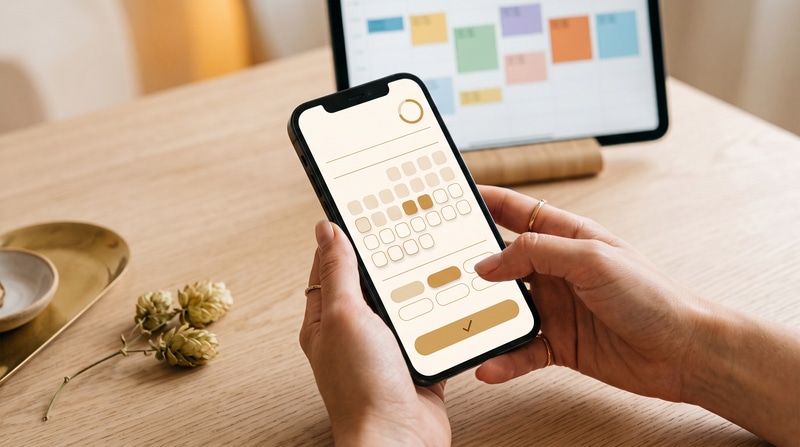
One of the most common mistakes in the sector is to assume that guest experience begins when the customer walks up to reception. In reality, it starts much earlier - when a prospective guest searches for information, encounters the brand for the first time, makes a booking and receives pre-visit communication. If the website is confusing, the confirmation email is ambiguous or the phone conversation feels rushed, the guest arrives with uncertainty already in place. In luxury hospitality, that matters. Uncertainty erodes the sense of care before the service has even begun.
Well-designed service therefore begins with information hygiene. Guests should be able to understand quickly what exactly they are booking, how long the visit will take, what they should bring, when they should arrive and what the arrival process looks like. If a brand operates multiple formats, the differences must be explained clearly. For Lázně Pramen, that means setting out plainly that the Prague locations can be found at two addresses in Prague: Dejvicka 255/18, Prague 6, where guests will find private, hand-built oak and larch tubs suited to a wellness experience for two, and Legerova, Prague 2, where the layout is also designed for groups, with steel baths and larger rooms. That is not a minor operational detail. It shapes expectation, and expectation heavily influences satisfaction.
Tone matters just as much as information. Premium service should not feel coldly formal, nor overfamiliar. It should feel calm, assured and precise. Confirmation messages need to be concise yet complete. Appointment reminders should help rather than overwhelm. If a booking changes, staff should be able to offer a solution without sounding defensive. Guests do not judge only the end result. They also judge how much effort they had to expend to get there.
Operators looking to improve spa customer service should map the entire guest journey from the first click to departure. This is where small points of friction often hide - issues that seem trivial internally but determine whether the service feels polished or amateurish to the customer. Strong guest experience is, at heart, process design. And that process begins before the guest ever opens the door.
The first few minutes shape trust and perceived value
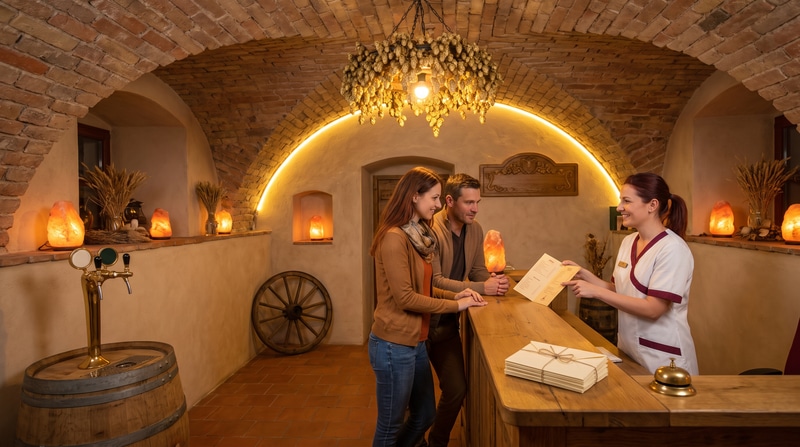
The moment a guest arrives, the brand promise stops being abstract and becomes tangible. Within minutes, the customer forms a view on whether the business is genuinely professional, clean, organised and worth the price paid. In a spa environment, reception is therefore far more than an administrative checkpoint. It is the place where the marketing promise is either confirmed or undermined. In luxury hospitality, a strong first impression is usually quiet, smooth and free of unnecessary obstacles. Guests should not feel that they are inconveniencing staff, waiting without explanation or repeating information they have already provided.
At this stage, good customer service depends on a handful of concrete skills. Staff need to welcome guests naturally, verify the reservation without confusion, explain the flow of the visit succinctly and respond to questions with sensitivity. Non-verbal communication is equally important: tone of voice, eye contact, pace of movement and the ability to project that everything is ready. Guests rarely leave saying, in explicit terms, that the receptionist was highly professional. More often, they leave with a simpler impression: it all felt easy. That is usually the clearest sign that service standards are working.
Those opening minutes also influence the perceived value of the treatment itself. If arrival is chaotic, guests begin to question the quality of the wider experience. A smooth check-in, by contrast, increases confidence and prepares the customer to relax. Premium operators also need the flexibility to handle different visit types well: a couple seeking privacy, a group of friends needing structure, or a first-time guest with more questions than usual. Standards should not be rigid. They should be consistent, but human.
This is where the distinction becomes clear between basic service delivery and genuine guest experience management. The best spa businesses do not leave first impressions to chance. They train for them, measure them and refine them continuously using real guest feedback.
How to train staff so service feels natural, not scripted
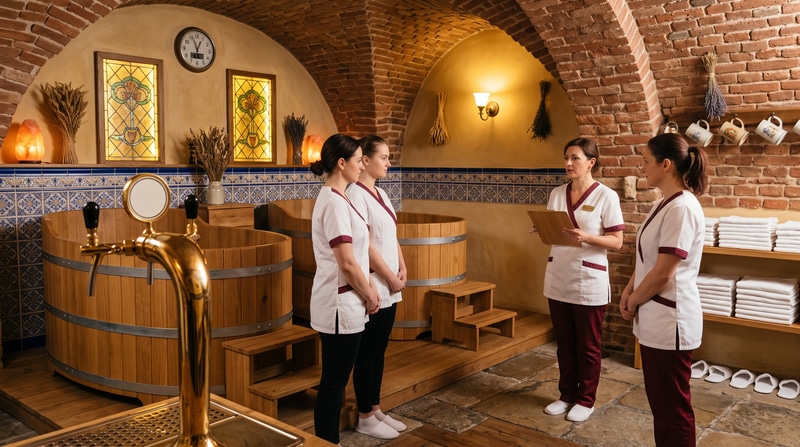
Any operator can write down service standards. Far fewer can turn them into lived behaviour on the floor. That is the real difficulty of spa customer service. Guests can quickly tell the difference between genuine care and a line that has simply been memorised. The purpose of training is therefore not to produce staff who recite scripts on cue, but teams who understand the principles of good service and can apply them intelligently in different situations. That requires a mix of clear rules, model scenarios and regular feedback in live operations.
Good training starts with a precise definition of what the brand means by quality service. It is not enough to tell staff to be friendly. Operators need to specify what a professional welcome looks like, how a treatment should be explained, how to handle a late arrival, how to communicate capacity constraints and how to respond to a complaint without becoming defensive. A useful framework is to divide standards into three layers: operational accuracy, communication style and emotional intelligence. The first ensures that nothing falls through the cracks. The second protects a consistent brand tone. The third determines whether the guest feels genuinely understood.
In practice, several training areas tend to matter most:
- active listening and the ability to ask short, relevant questions,
- clear explanations of treatments without unnecessary technical language,
- management of guest expectations before, during and after the visit,
- handling complaints and tense situations in a calm tone,
- discretion and respect for privacy in an intimate spa setting,
- the ability to offer additional services without resorting to pressure selling.
It is equally important to recognise that staff cannot sustain excellent performance without support from management. If shifts are overloaded, processes are unclear and internal communication is chaotic, service quality will eventually break down. Client retention spa therefore begins not only with the guest, but within the team itself. Stable, well-led staff create the consistency guests notice. In premium services, that consistency is one of the strongest competitive advantages a brand can have.
Personalisation without overdoing it: what really drives retention
Personalisation is one of hospitality's favourite terms, but in practice it is often confused with theatrical gestures that add little real value. In a spa setting, guests are rarely looking for spectacle. What they want is a business that understands their situation, respects their time and provides an appropriate degree of individual care. That is worth far more than communication that feels artificially intimate. Client retention spa is not built on a single wow moment. It is built on repeated confirmation that the brand is reliable.
Useful personalisation starts with data that has operational value. That includes visit history, preferred booking times, the types of services reserved, preferred communication channels and notes that help improve the next visit. The key is to work only with information that genuinely supports service quality and to handle it with sensitivity and transparency. If a guest consistently chooses a more private visit format, the business should be able to reflect that preference. If someone is visiting with a gift voucher and is unfamiliar with the concept, communication should adapt accordingly. That is what luxury hospitality looks like in practice: not overwhelming guests with attention, but removing unnecessary friction.
Retention is also strengthened by intelligent follow-up. After a visit, a brief thank-you message is appropriate, provided it does not feel empty or automated. More important is making the next contact at the right time and in the right format. Sometimes that means reminding the guest about the option of a gift voucher. In other cases, it may mean highlighting relevant updates or directing them to further reading on our blog. If the brand is also expanding its network and operating model, it can naturally explain the broader context of how quality is maintained within a franchise model. In that way, the guest sees not only an individual visit, but the credibility of the wider brand.
Good retention does not look like constant prompting. It looks like a relationship that is timed with care. Guests return when they feel the brand knows what it is doing and communicates with respect. In the spa segment, that matters especially because the visit is tied to rest, privacy and calm. Brands that understand this tend to build loyalty more effectively than those relying mainly on discount mechanics.
How to handle complaints in a way that strengthens trust
No operation is flawless. The difference between an average brand and a strong one often becomes visible only when something goes wrong. In a spa setting, that may mean a delay, a booking misunderstanding, a mismatch between expectation and treatment, or simply a situation in which the guest does not feel comfortable. In these moments, a complaint is a valuable test of the business. Handled professionally, it can restore trust and sometimes even deepen it. Handled defensively, minimised or hidden behind policy, it quickly turns into reputational damage that spreads through reviews and personal recommendations.
The first rule is to separate explanation from self-justification. Guests need to see, first of all, that they have been heard. Only then is there space to clarify the circumstances and propose a solution. Staff should be able to remain calm, restate the issue in their own words and confirm the next step. In many cases, a fast and clear response is more valuable than a long argument. Guests remember not only what the business said, but whether it appeared confident, fair and accountable. In luxury hospitality, trust is closely linked to the sense that responsibility is taken seriously.
A practical response process may look like this:
- listen to the guest without interruption,
- briefly confirm understanding of the issue,
- apologise for the inconvenience without unnecessary defensiveness,
- propose a concrete solution within a realistic timeframe,
- after resolution, review the cause internally and adjust the process.
A common mistake is to treat complaints as a front-line problem only. In reality, they are often signals of a wider systemic weakness: unclear instructions, poor handovers, overloaded shifts or services that have not been described properly. When management analyses complaints rather than merely containing them, it gains a precise view of where guest experience is losing quality. That discipline separates businesses that simply firefight from those that build a durable reputation over time.
Connecting service, brand and commercial performance
Spa customer service is sometimes treated as a soft function detached from commercial results. That view is short-sighted. In practice, service quality plays a direct role in determining whether a visit becomes a long-term relationship, a recommendation or interest in a broader relationship with the brand. Guest experience feeds into reviews, repeat visits, voucher usage and willingness to pay for a premium standard. In other words, service is not an optional cost layer. It is a core mechanism for value creation and market differentiation at a time when treatments themselves are increasingly easy to compare.
Strong brands also manage service consistently across channels and locations. In the case of Lázně Pramen, that matters because the concept is built on a clearly defined format that is being developed as a European network. When the discussion turns to expansion or the business model, it is natural to point to franchising information. When the focus is capital, development or the wider commercial opportunity, the next logical reference is the page for investors and investment information. For prospective partners, customer service quality is one of the clearest indicators of whether a concept is transferable and sustainable over the long term.
Commercially, the impact of service appears on several levels. First, the likelihood of repeat visits increases. Second, brand recommendation improves. Third, price sensitivity falls because guests are evaluating not just the minutes of a treatment, but the overall standard of care. Fourth, internal efficiency improves because well-designed processes reduce errors, complaints and improvisation. Taken together, these factors create a stronger basis for growth than aggressive acquisition unsupported by operational quality.
Managers should therefore measure service not only through broad satisfaction surveys, but through specific operating indicators: response times, the rate of booking misunderstandings, repeat visit patterns, review quality and the frequency of escalated issues. Only by linking the softer dimensions of guest experience with harder operating data does a genuinely manageable model emerge - one that supports both brand growth and brand credibility.
How to turn luxury hospitality principles into daily practice
Every operator should ask a simple question: what, precisely, must a guest experience in order to say afterwards that the service was exceptional? The answer usually does not lie in one dramatic feature. It lies in a sequence of small moments handled well. A prompt response to an enquiry. Clear instructions. A calm check-in. A professional explanation of what will happen. Discretion. Clean surroundings. A smooth departure. Follow-up communication that actually makes sense. At its best, luxury hospitality is understated. Guests recognise it because they do not need to manage anything themselves and because the entire experience feels natural and frictionless.
For spa management, that means translating abstract values into concrete habits. Every team member needs to know what is standard, what is flexible and what requires escalation. It is just as important to review regularly whether processes genuinely match guest expectations. That goes beyond front-line communication. It includes capacity planning, information handovers between shifts and the quality of internal instructions. If a business wants to grow, a pleasant atmosphere is not enough. It needs an operationally robust system capable of producing that atmosphere reliably, again and again.
For a brand such as Lázně Pramen, this is especially important. The strength of the concept does not rest only on beer baths, wine baths, massages, private rooms or gift vouchers, but on how the entire experience is delivered. Whether a guest is heading to the more intimate setting in Prague 6 or the larger operation in Prague 2, the expectation is the same: certainty, care and professionalism. For anyone who wants to learn more about visiting, partnership opportunities or a consultation, the most natural next step is to contact our team.
Spa customer service, then, is not a cosmetic layer applied on top of the product. It is an operating discipline, the brand in action and one of the strongest drivers of loyalty. Businesses that master it create not only a better guest experience, but a more resilient operation, a stronger reputation and better conditions for long-term growth.
Sources
- Global Wellness Institute - Industry research - globalwellnessinstitute.org
- McKinsey & Company - Customer experience insights - mckinsey.com
- Statista - Spa & wellness industry data - statista.com
- European Spa Association (ESPA) - Industry standards - europeanspas.eu
- Harvard Business Review - Customer experience - hbr.org