Why a luxury spa needs a different kind of marketing
A premium spa does not sell a bath. It sells an hour a guest remembers for years, a story they retell to friends, and the quiet satisfaction of finally treating themselves to something they feel entitled to. That is precisely why luxury wellness marketing does not obey the rules that govern advertising for an ordinary service. Price is not a liability to be defended here - it is a signal of value. Availability is not a virtue to be maximised, but a form of managed exclusivity. And content is not there to inform; it is there to awaken desire.
The Lázně Pramen brand was founded in Prague in 2007, and from the outset it rested on a clear principle: bathing in beer brewed from Žatec hops and in the Petrovické craft batch - light and dark, poured straight beside the tub - is a sensory event, not a line item on a price list. That understanding reshapes the entire approach to communication. Where mass-market wellness competes on discounts and volume, the premium segment competes on meaning, aesthetics and narrative.
This article walks through the complete marketing strategy of a luxury spa - from brand positioning through visual identity and social content to influencer collaboration and the work of building a community that returns. We focus on principles that hold whether you run a single venue or an entire network. For anyone still weighing a business of their own, marketing know-how is one of the assets the franchise model delivers: the brand, the visual language and proven communication playbooks arrive as part of the package, rather than something each operator has to work out from scratch.
The core thesis is simple. A luxury spa does not sell a procedure; it sells a transformation of mood, status and memory. Every marketing decision - from the choice of a photograph to the phrasing of a single caption - must support that transformation. The moment communication promises nothing more than "relaxation at a discount", the brand demotes itself into a category it will struggle to climb back out of.
Positioning: what exactly you are selling
Positioning is the single most important decision in luxury spa marketing, and paradoxically the one most operators make least deliberately. For most venues, positioning is accidental - it emerged from whatever the first flyer happened to look like, or from where the first price landed. A premium brand chooses its position on purpose, then defends it against the daily pressure to discount, bolt on another service, or process guests faster.
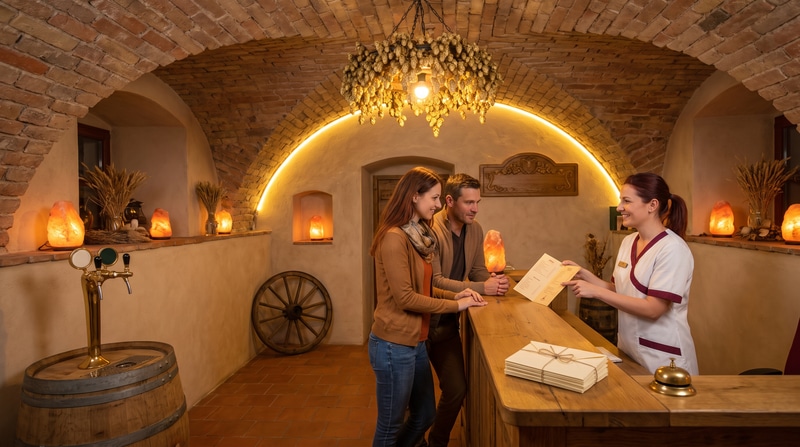
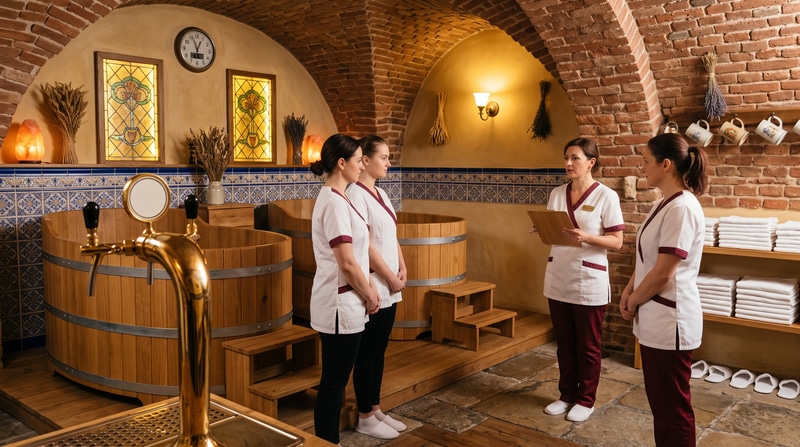
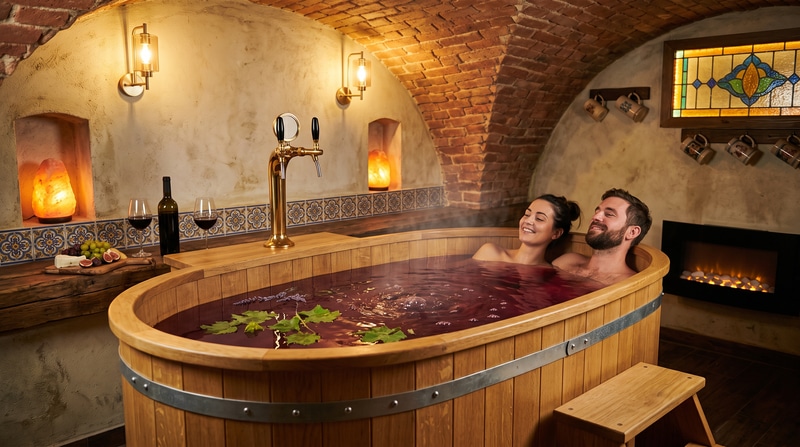
The key question is not "what do we offer" but "what feeling does the guest walk away with, and what does that feeling say about them". At the Prague venue in Dejvicka, the answer is a blend of intimacy, craft and calm. Hand-built oak and larch tubs holding 1,000 litres, water at 35-38 °C, four private cellar rooms - Zlatý pramen, Rubínový pramen, Smaragdový pramen and Safírový pramen - none of these are incidental details. They are proof points of the positioning. Each one tells the guest, without a word, that they are being looked after differently than in any mass wellness setting.
Positioning can be sharpened through a handful of concrete decisions:
- Price as a message - never apologise for the price; frame it as the natural consequence of craft and exclusivity.
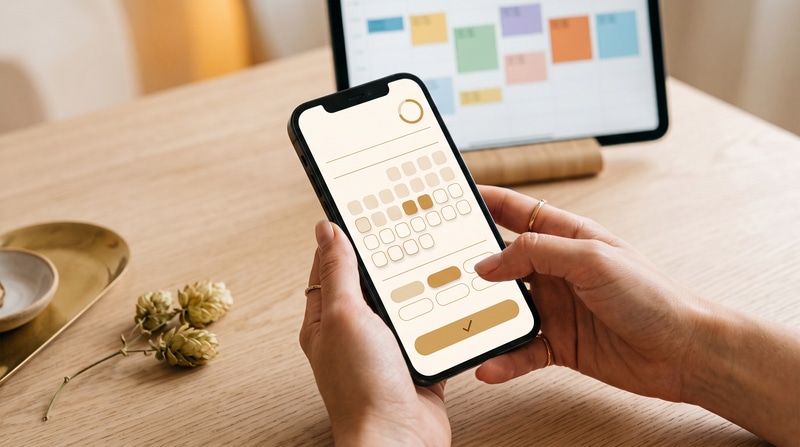
- Managed availability - advance booking and private rooms signal that this is an event, not a walk-through service.
- The language of the brand - words like "ritual", "indulge" and "privacy" work very differently from "package" or "deal".
- Consistency across channels - the website, the social feeds and the welcome at the door must all tell the same story.
Positioning is also what the value of the entire network rests on for future partners. A clearly defined premium position is an asset that can be replicated - and that is exactly what any serious investor weighing entry into the wellness segment cares about. Without firm positioning, a brand is merely a name; with it, the brand becomes a system that generates repeatable value at every new address.
Visual identity and the sensory story
In luxury wellness, the first visual impression lands before the guest reads a single word. Photography, colour palette and light do most of the work text would otherwise have to carry. That is why a premium brand invests more in its visual identity than in any one-off advertisement - because the visuals are recycled across the website, the social feeds, the gift vouchers and the print, and their quality compounds with every reuse.
The sensory story of a luxury spa rests on materials that look and feel expensive because they genuinely are. The wood of the hand-built tubs, the golden hue of the beer, the amber light of the cellar, the steam rising off the surface at 35-38 °C. These elements can be captured so that the viewer almost feels the warmth and catches the scent of Žatec hops. The aim is not to show a procedure but to provoke a physical craving - that moment when someone realises this is precisely what they have been missing.
A few principles separate premium visual communication from the amateur kind:
- Warm, low light - harsh white lighting reads as clinical; luxury lives in half-shadow.
- Details over overviews - a droplet on wood, a hand resting on the rim of the tub, a head of foam say more than a wide shot of the room.
- People as part of the atmosphere - the guest should look relaxed and present, never posed like a catalogue model.
- A consistent colour world - amber, wood, green and deep black recur in every frame, and the brand becomes recognisable at a glance.
Visual identity has to be portable. Once you have built a visual language that faithfully captures the sensory experience, it becomes a template for every new room and every future venue. That is also why it ranks among the most valuable elements a new operator receives fully formed within the franchise - there is no need to work out how to photograph steam over a beer bath so that it stirs desire, because a proven visual canon already exists and simply needs to be followed.
Social media as the shop window of the experience
Instagram and other visual platforms are a natural home for luxury wellness, because they sell exactly what a spa offers: an atmosphere people want to remember and share. Behavioural data consistently place wellness and spa content among the most shared categories, precisely because it pairs aspiration with rest. A guest who photographs the foam over the surface of a beer bath is not showing off a service - they are showing off how well they know how to live.
A premium brand's social content strategy should follow a few firm rules. First, quality over quantity: three flawless posts a week beat ten average ones. Second, story over sales: let two-thirds of the content speak to the experience, the atmosphere and the craft, and only a third push directly toward a booking. Third, authenticity over polish: over-retouched content now reads as untrustworthy, while honest frames of steam, wood and light build credibility.
The formats that work best for a luxury spa:
- Short video capturing beer poured into the tub, rising steam and the stillness of a private room.
- Craft behind the scenes - how the bathing blend of hops, malt and yeast comes together.
- Guest-created content - resharing authentic photographs from visitors with their permission and a discreet credit.
- Seasonal stories - Christmas, Valentine's and anniversaries, when the most people are searching for an exceptional gift or experience.
Social feeds also serve as a bridge to deeper content. Linking through to longer articles on the blog - on the effect of hops on the skin, the history of beer spas, or the ritual of the bath - turns a casual viewer into an informed prospect. The social channel is not a world of its own; it is the entry point into the brand's ecosystem, guiding the visitor step by step from first attraction to booking. A premium brand therefore never counts likes alone, but how many people the content genuinely moved one step closer to the door.
Influencer marketing with a feel for exclusivity
Working with content creators is a double-edged sword for a luxury spa. A well-chosen influencer can set the brand inside the aspirational world of their followers and bring in guests who would otherwise never have known such an experience exists. A badly chosen one cheapens the brand - when a premium venue appears alongside discount codes and mass promotion, the guest subconsciously reassesses which category it actually belongs to.
The key is to select by values, not by follower count. For the luxury segment, micro-influencers with ten to fifty thousand followers are often more effective, provided their audience is tightly focused on travel, gastronomy, design or lifestyle. Their recommendations feel more personal and their engagement tends to run higher. Broad reach without relevance is a risk to a premium brand, not a benefit.
Principles of collaboration that protect the positioning:
- Experience over transaction - invite the creator for a genuine visit, let them feel the atmosphere of the cellar rooms, and do not hand them a script.
- Visual quality as a condition - the content must match the brand's aesthetic, or the collaboration does not get published.
- No discount codes in the premium segment - exclusivity is built on invitation and rarity, not on percentages off.
- Long-term over one-off - a repeat visit from one trusted creator carries more weight than ten scattered mentions.
Influencer marketing should always point toward a clear next step. The creator should not merely show how beautiful it is - they should hint to their followers how to get there. A clear call to book, or a link to arrange a visit, turns inspiration into concrete intent. Without that bridge, even the most beautiful collaboration remains a pleasant memory for the creator, rather than a source of new guests.
Building community and repeat visits
The cheapest and at the same time most valuable marketing a luxury spa has is a satisfied guest who returns and brings others. In the premium segment the cost of acquiring a new customer is high, which is why the real profitability sits in loyalty and referrals. A marketing strategy fixated on the first visit, and blind to what happens afterwards, leaves most of the value on the table.
Community is built through care, not campaigns. It starts with the experience itself - a guest who leaves feeling they received more than they expected. It continues with gentle follow-up that never feels intrusive: a thank-you for the visit, an invitation for an anniversary, a tip about a quiet off-peak slot. The premium approach means that communication with the guest holds the same standard as the service itself - no mass, impersonal messages, but words that respect the fact that this guest chose something exceptional.
The tools that sustain the relationship in the premium segment:
- Gift vouchers - a natural way for a happy guest to bring in a new one; the experience is passed on as a gift.
- Private events - booking whole rooms for couples or small groups turns celebrations into memories tied to the brand.
- Personalisation - remembering a preferred room or type of beer turns a guest into a regular.
- Content that educates - articles on the effects of the bath and the ritual of rest keep the brand in mind between visits.
The different private rooms - from Zlatý pramen with two tubs for couples through to group bookings - make it possible to address different reasons to visit without the brand losing its unified character. A couple marks an anniversary in Smaragdový pramen, friends book several rooms at once, another guest treats themselves to a massage in the Safírový pramen salt cave. Each of these scenarios is a different gateway into the same community, and marketing's job is to name those gateways clearly and invite people inside.
Measuring results without losing the premium
Premium marketing must never become an excuse for missing numbers. On the contrary - precisely because luxury campaigns cost more and their effect tends to be indirect, disciplined measurement is essential. The art lies in measuring in a way that the pursuit of data does not damage the experience itself. Nobody wants a guest filling in a questionnaire mid-bath; there are smarter, more discreet signals to track.
The metrics that make sense for a luxury spa:
- Repeat visit rate - how many guests return within twelve months; the best proof that both the positioning and the experience are working.
- Share of bookings from referrals - a simple "how did you hear about us" reveals the strength of word of mouth.
- Gift voucher sales and redemptions - a voucher is both a marketing channel and a revenue one.
- Social engagement, not just reach - a save or a share weighs more than a like.
- Average booking value - it rises when communication successfully steers guests toward premium rooms and combined experiences.
Data should serve decisions, not fuel a chase for volume. When the numbers show that a certain type of content brings in guests with a higher booking value, it makes sense to scale it up. When a discount turns out to have lifted visit numbers while depressing their average value and drawing a less suitable audience, that is a signal the path lies elsewhere. A premium brand measures the quality of the relationship, not merely the quantity of transactions.
For the network as a whole, systematic measurement is also the language spoken with partners. Verified figures on repeat visits, voucher value and channel performance turn marketing into a predictable growth tool rather than a gamble. This data foundation is one of the reasons an established, measurable marketing system matters so much in the offer to any investor weighing entry into a working concept rather than building a brand from zero.
From one brand to a network: marketing that scales
The hardest discipline in luxury spa marketing is holding the premium character intact through growth. A single venue can rely on the personality of the owner and on intuition. A network needs a system - otherwise the brand dilutes with every new location, and what once felt exclusive slides into the average. Scalable marketing therefore means codifying everything that worked in one venue through instinct into clear rules that can be handed on.
That system rests on several pillars. A visual manual defines how every photograph and every post should look. A brand vocabulary sets the language used with guests. Experience standards ensure that a guest feels the same level of care in every room and at every future address. And a set of proven marketing playbooks - from seasonal campaigns to voucher programmes - hands a new operator a ready-made plan instead of a blank page.
This is exactly the principle behind the European expansion of the franchise model. A new partner receives not merely the right to use a name, but an entire ecosystem: the brand, the visual language, the communication playbooks and the operating experience of the Prague venue since 2007. That dramatically shortens the time it takes a new venue to reach premium perception, because it does not have to spend years building credibility from scratch - it arrives with a finished identity.
Marketing for network development, meanwhile, has two distinct audiences, and the communication has to speak to both:
- Guests - people seeking an exceptional experience, a gift, or a calm escape from the everyday.
- Partners and investors - entrepreneurs seeking a proven concept with replicable value and clear positioning.
Both audiences share one story: a premium experience that can be carried forward with care, without losing its soul. Anyone who wants to examine that story from the perspective of their own business can get in touch to discuss how the marketing system works in practice. Luxury spa marketing, after all, does not end at filling a single tub - it begins where one experience becomes a brand capable of growing.
Sources
- Global Wellness Institute - wellness and spa industry research - globalwellnessinstitute.org
- McKinsey & Company - The trends defining the wellness market - www.mckinsey.com
- Statista - Spa market worldwide statistics & facts - www.statista.com