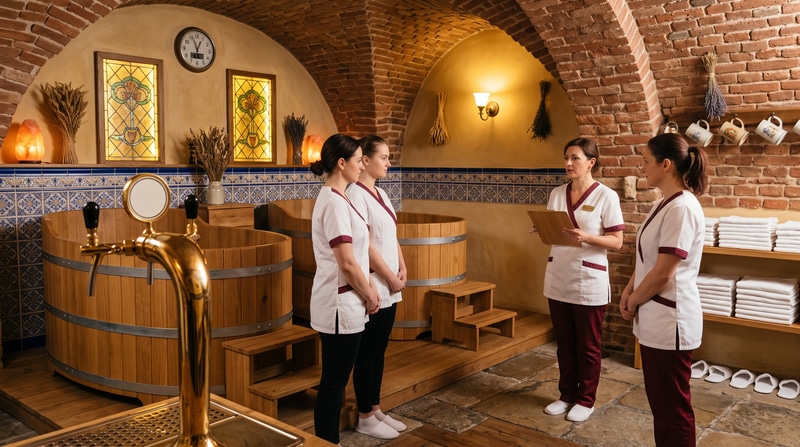
Why the outcome of a spa is decided by the team, not the equipment
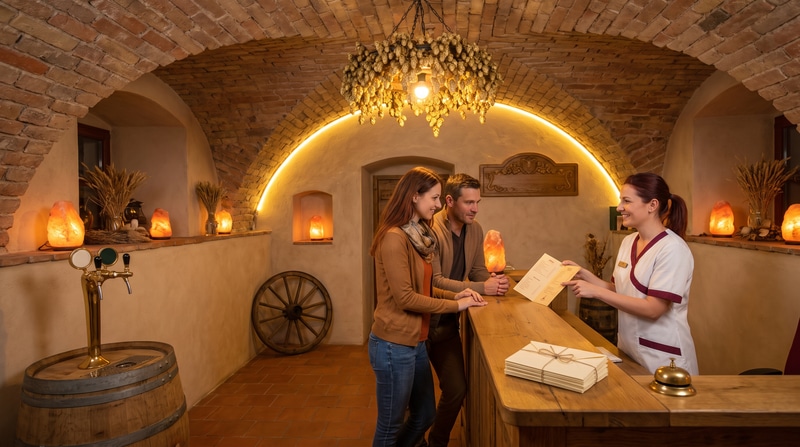
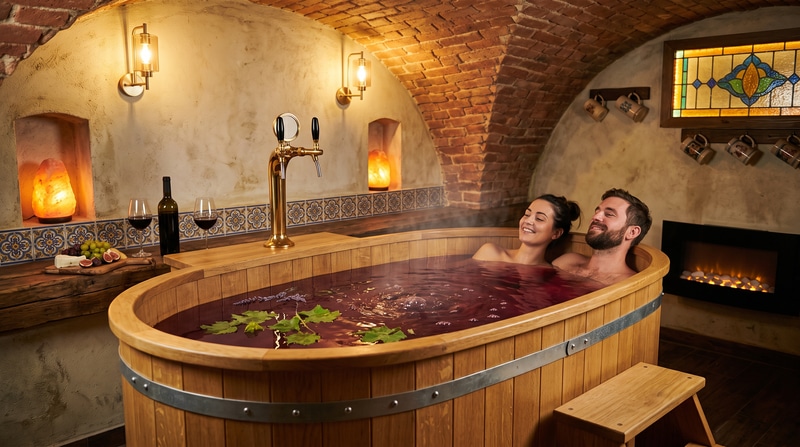
In any wellness business it is tempting to believe the equipment wins the guest - the hand-built oak and larch tubs, the good beer on tap, the softly lit cellar. Equipment is the price of entry, not a competitive advantage. When a guest leaves, they do not remember the litre capacity of the tub or the water temperature to the nearest tenth of a degree. They remember whether someone greeted them by name, whether the therapist knew exactly what they were doing, and whether they felt looked after from start to finish. All of that is the work of people, not machines.
The Lázně Pramen brand has operated since 2007, and over that time one thing has become clear: the difference between an average visit and an outstanding one is not the treatment itself but the way the team delivers it. Two therapists can perform an identical massage and one guest walks out satisfied while the other walks out delighted. That gap is a management gap - how people are trained, how motivated they are, and how smoothly they hand off to each other during a shift.
The Dejvice flagship has four private rooms - the Golden Spring with two tubs, the Ruby and Emerald Springs with one tub each, and the Sapphire Spring, a salt cave for massage. Each room calls for a different pace and different timing. The team has to decide who takes the couples in an intimate setting and who handles a larger group, without one waiting at the expense of the other. That is not a matter of a rota on paper; it is the day-to-day coordination a manager builds shift after shift.
This article sets out how to build and keep such a team - from recruitment through training to daily organisation and quality. It is written for operators and for anyone weighing up a location of their own who wants to understand what leading people in wellness really involves.
Recruitment: who to look for and how to spot the right person
The most common mistake in spa hiring is to chase a finished massage expert and overlook everything else. Massage technique can be taught; warmth, composure and the ability to read a guest's mood cannot. So when selecting therapists and front-of-house staff, character and attitude matter as much as any certificate. Someone who naturally cares for others and has no trouble staying gracious all day will pick up the strokes faster than a certified professional learns to be kind.
In practice, a structured interview paired with a trial shift works best. The candidate spends a few hours in the operation, meets real guests, and the team watches how they behave under pressure - when two bookings overlap, when a guest arrives irritated, or when improvisation is called for. A CV shows none of this. A trial shift also protects the candidate: they find out for themselves whether a cellar spa, with its warm water and steam, is a place they want to work.
It pays to look for specific traits and to probe for them deliberately:
- reliability - they arrived on time, kept their word, follow through on what they promise
- empathy - they can tell whether a guest wants conversation or silence
- resilience - they get through a busy weekend without the next guest paying for it
- hygiene discipline - around baths and massage, cleanliness is non-negotiable
- willingness to learn - our techniques and processes evolve over time
For a site opening as a franchise, recruitment is an especially delicate stage. A new branch hires its first team with no established internal patterns, so the first four to six people effectively set the culture for years. Anyone thinking about investing in a location of their own should treat the hours spent hiring that first team as among the highest-return time they will put into the project. A bad hire made quickly costs more than a role left open a little longer.
Training therapists: a standard that does not shift with the mood
The point of training is not to produce ten identical therapists but to make sure every one of them delivers the same high level regardless of who is on shift. A guest who has had a great visit to Lázně Pramen comes back expecting the next one to be just as good - even if a different person serves them. The only way to guarantee that is a written standard and rigorous onboarding into it.
We break the training of a new therapist into several layers. First, the product and the environment: what goes into the bath, why Saatz hops, malt and yeast belong in the water, how the tubs are filled and brought to 35-38 °C, how the beer tap works and what the logic of each room is. The second layer is massage technique itself - classic and combined - including contraindications and safety. The third layer, which people underestimate, is communication with the guest: the welcome, explaining the treatment, handling the intimate zone with a couple, and the goodbye.
Training does not end after the first week. A working system rests on regular refreshers and on a more experienced colleague shadowing the newcomer. The literature on health and massage keeps moving, and it is sensible to follow guidance on the safety of heat treatments - as the wellness and thermal spa sources below point out, heat and alcohol do not mix well for some guests, and the team has to recognise this and communicate it tactfully.
Elements of continuous training that prove their worth:
- regular short technique sessions rather than a single marathon at the start
- shadowing an experienced therapist in the first weeks
- guest feedback translated into concrete recommendations
- refreshing safety and hygiene procedures at least quarterly
Across a growing network of branches, uniform training is what holds the brand together from one country to the next. Without a shared standard, each branch would drift its own way over time and the name would stop promising anything.
Retention: why turnover hurts more than it looks
In a service business, losing a good person costs far more than the number on their payslip. What walks out of the door is not just a pair of hands but the relationship with returning guests, the working knowledge of the operation, and hundreds of hours of onboarding. A replacement needs weeks to reach the same assurance. That makes retention a strategic question, not a piece of HR admin. Research on job satisfaction consistently shows that people do not leave primarily over money but over how they feel they are led - and wellness is no exception.
Pay has to be right, of course; an underpaid therapist leaves whatever the atmosphere. But beyond fair pay sit a range of factors a manager controls directly. A predictable rota that people can see ahead reduces stress and lets them fit work around their lives. Recognition for a well-delivered visit - specific and named - lands better than a generic thank-you once a year. And room to grow - learning a new technique, taking on training newcomers, eventually running a shift - gives the job direction.
The physical demand in a spa is real: massage takes its toll on backs and hands, and working around warm water and steam is tiring. Ignore this and the team burns itself out. A sensible schedule builds in breaks, alternates heavier and lighter blocks, and does not ask one person to massage through an entire weekend unbroken.
What keeps good people in a spa operation:
- fair, transparent pay that can be discussed openly
- a rota published well in advance
- specific recognition instead of generic phrases
- a genuine path to grow and take on responsibility
- respect for the physical load and enough time to recover
For anyone weighing up an investment in a wellness business, low turnover is one of the best signals of healthy leadership. A stable team means higher quality, happier guests and fewer hidden costs - something we are glad to talk through in a consultation.
Daily organisation: rotas, roles and a smooth shift
The best team does poor work on a badly planned day. Daily organisation is a craft, and it decides whether a guest slips into a calm experience or runs into chaos. At the Dejvice operation, four rooms of different capacity intersect - two tubs in the Golden Spring for two to four people, standalone tubs in the Ruby and Emerald Springs, and the Sapphire Spring salt cave for massage. Every booking means different fill timing for the tubs, a different number of hands, and a different flow between rooms.
The foundation is a clear division of roles on the shift. Who receives guests and guides them through the space, who prepares and tempers the tubs, who massages, and who watches over the back-of-house and cleanliness. If roles are not named, two people do the same thing and a third is left undone. In busy blocks - typically at the weekend - roles have to overlap, but a default division must exist to improvise from.
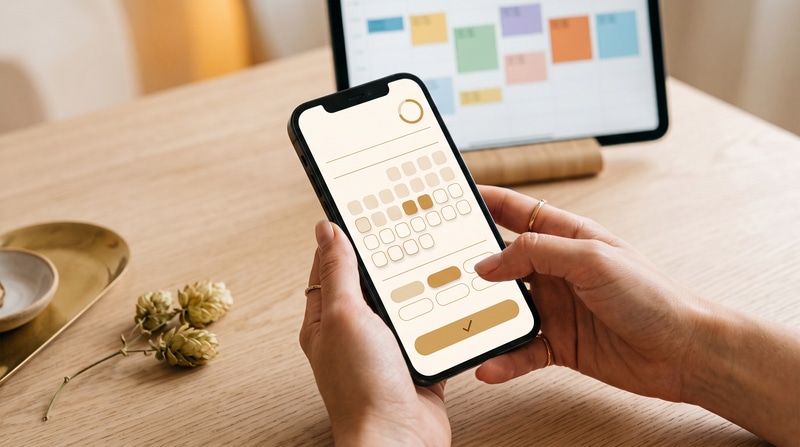
A rota is not a headcount table; it is peak management. Bookings do not arrive evenly - couples come at different times than groups, evenings fill up more than mornings. A good manager reads the booking history and plans capacity by it, not by an average. A short briefing at the start of the shift, where the team runs through who is coming and what each booking involves, saves hours of confusion later.
Practical principles for a smooth shift:
- a morning briefing with an overview of all the day's bookings
- named roles and clear ownership of each room
- planning tub fills so a guest never waits on cold water
- spare capacity for late arrivals and last-minute changes
- a short debrief after the shift - what worked, what to do differently next time
Operational discipline is also what makes the model portable. Without it, a new branch could not go live roughly half a year after signing, as the franchise model assumes.
Company culture and the communication that holds a team together
Culture is not a poster on the wall or a list of values in a deck. It is the set of things a team does even when no one is watching. In a spa it shows up in small ways: whether a therapist cleans up after themselves even with another booking waiting, whether colleagues cover each other in the rush, and whether a problem gets aired out loud or swept under the carpet. This culture is built by the manager day by day, through their own example - what you tolerate, you endorse.
The key is regular, honest communication. A short briefing before the shift and a brief debrief after it create a rhythm in which nothing gets lost. A longer meeting now and then, to go over guest feedback, planned changes and the team's own ideas, gives people the sense that their voice counts. Therapists and front-of-house see the guest up close and often know more about the operation than any spreadsheet - whoever fails to listen to them forfeits the best source of improvement they have.
Conflicts in a service business do not arise because the team is bad but because it is under pressure. What makes the difference is whether they are dealt with promptly and matter-of-factly or left to fester. A manager who finds time for a quiet word one-to-one the same day defuses most tension before it spills over into work in front of a guest.
You can spot a healthy spa culture by a few signs:
- people help each other without being asked
- a mistake is owned and fixed rather than buried
- a newcomer feels welcome from day one
- feedback flows both ways, not just top-down
- the guest feels calm because the team behind the curtain runs without friction
It is precisely this atmosphere that sets Lázně Pramen apart from an operation with the same equipment but a team at war with itself.
Measuring quality: how to know your leadership is working
Without measurement, leading a team is just a feeling. To know what to improve, a manager needs a handful of simple indicators the whole team understands and that are not there for their own sake. The aim is not to bury people in spreadsheets but to hold a few numbers and signals that show whether quality is holding, rising or slipping. Over-measuring demotivates just as much as measuring nothing.
The most valuable feedback comes straight from guests. Reviews and off-the-cuff remarks after a visit say more than any internal form - provided they are read regularly and turned into concrete steps. When reviews keep praising one therapist for a calm approach, the team knows what is working and what to build on. When a complaint about waiting appears, it is a signal to adjust the rota, not to scold an individual.
Inside the team, a few operational signals help. How many guests return and how many arrive on a recommendation; how often bookings overlap so that someone waits; how long new people last and what overall turnover looks like. The point is not to drive these numbers to perfection but to understand their trend. A stable team with a high share of returning guests is the best proof that leadership is working.
What to watch so that measurement means something:
- the content of reviews, not just the average score
- the share of returning guests and referrals as a marker of experience quality
- turnover and length of service as an indicator of healthy leadership
- the frequency of operational snags the team itself reports
For an investor, these figures tie directly to the economics of the operation. A sound franchise model assumes payback in roughly 18 to 24 months, monthly running costs between 15,000 and 25,000 EUR, and the first three months fee-free - and every one of those assumptions rests on whether the team keeps quality and guests. We are happy to go through the detail at a no-obligation meeting.
In summary: good leadership as a competitive advantage
Leading a spa team is not a soft discipline at the edge of the business. It is the main lever by which an operator shapes the guest experience, the economics of the branch and the reputation of the brand. Equipment can be bought and copied, technology ages, but a well-coordinated, contented, well-led team is an asset a competitor simply cannot replicate. That is why leading people belongs at the top of the priority list, not somewhere after marketing and procurement.
The whole chain holds only when every link works. Patient recruitment brings in the right people. Thorough, ongoing training turns them into a team with a single standard. Considered retention stops expensively trained people from leaving and taking knowledge and guest relationships with them. Daily organisation converts a good team into a smooth shift. Culture and honest communication hold the whole together under pressure. And level-headed quality measurement gives the manager confidence they are heading the right way. Drop one link and you weaken all the others.
The experience of Lázně Pramen since 2007 confirms something simple: guests come back for people, not for a tub. The four private rooms at the Dejvice flagship offer everything from intimate wellness for a couple to a larger group booking, but only the team decides whether that variety reads as a strength or as confusion.
For anyone contemplating a location of their own, managing people is the very skill worth mastering before anything else. You will find details on joining the network, and the role a prepared team plays within it, on the franchise page and among the information for investors; other pieces on operations and wellness sit on the blog. We are always glad to meet for a consultation and talk through how to build such a team from scratch.
Sources
- Global Wellness Institute - research on the wellness economy and the spa sector - globalwellnessinstitute.org
- McKinsey & Company - why people leave their jobs and how to keep them - www.mckinsey.com