Why technology is entering even traditional spas
Bathing is one of the oldest rituals of care for body and mind, yet it is no more immune to digitalisation than any other industry. The heart of the experience - warm water, the scent of hops, quiet and privacy - has barely changed in centuries. What has changed, quietly and profoundly, is the way the operation runs behind the scenes. A modern spa now manages bookings, bath temperatures, ingredient consumption and guest communication through connected digital systems that, ten years ago, were simply not available at a sensible price.
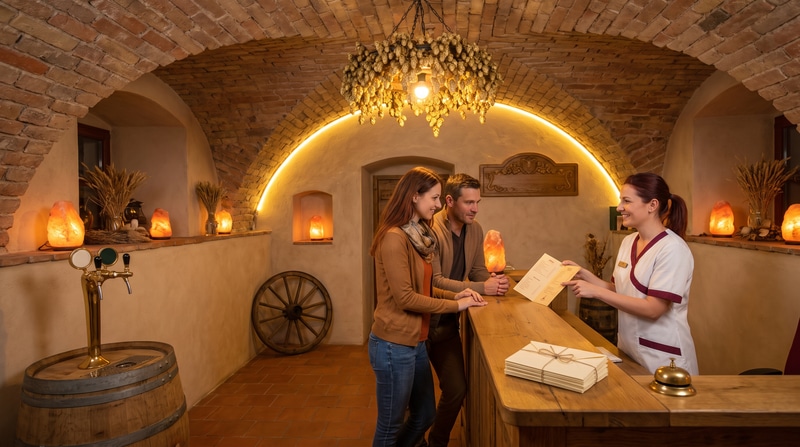
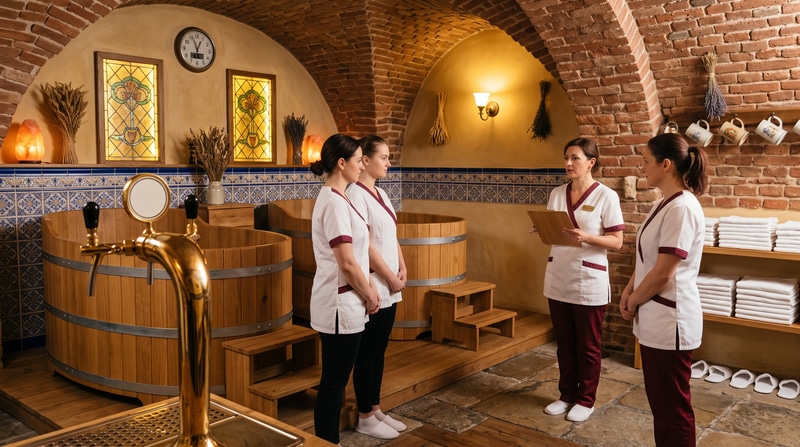
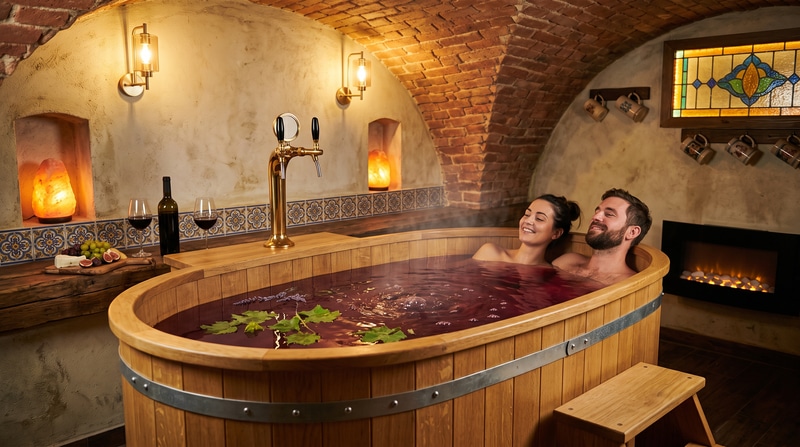
At Lázně Pramen, which has operated beer and wine spas in Prague since 2007, we treat technology as something that serves the atmosphere rather than replacing it. A guest arriving at our cellar space at Dejvická 255/18 in Prague 6 should be free to enjoy the hand-built wooden tubs, the low light and a fresh Czech craft beer poured straight from the tap. The fact that a carefully designed technological infrastructure sits behind all of it is something the guest usually never notices - and that invisibility is precisely the point of good digitalisation.
This article looks at the concrete ways technology is transforming spa operations: from smart temperature control and the internet of things to the data that helps operators make sharper decisions. We keep the focus on the business side, because that is where the real question is settled - whether a wellness operation is sustainable and profitable. For anyone weighing entry into this sector, for example through a franchise, understanding the role of technology is essential. It is not a luxury add-on but a direct driver of cost, service quality and guest satisfaction.
Smart control of temperature and bath quality
The bath, held at exactly the right temperature, is the heart of any beer spa. At Lázně Pramen we keep our hand-built oak and larch tubs - each holding 1,000 litres - in the 35 to 38 degrees Celsius range, which is comfortable and safe in equal measure. Holding that temperature steady is no trivial task in an environment where the water is constantly refreshed and dosed with beer extracts, hops and other ingredients. This is where smart control earns its place.
Modern sensors measure bath temperature continuously and adjust the heating automatically the moment it drifts. The benefits stack up quickly. No guest ever steps into water that is too hot or too tepid, which matters both for safety and for the overall impression of the visit. The operator no longer relies solely on manual checks by staff, which cuts the risk of human error and frees employees for the work where they add far more value - looking after the guest and making that personal connection.
Then there is energy efficiency. Heating a large volume of water is among the costliest line items in any wellness operation. Intelligent systems pre-heat the baths against the booking calendar, so a tub is ready exactly when the guest arrives and no energy is wasted holding temperature in an empty room. Across our suites - Zlatý pramen with two tubs, Rubínový pramen, and the V.I.P. room Smaragdový pramen - this lets us sync preparation with occupancy and meaningfully trim running costs.
Monitoring water quality and its chemical balance supports hygiene and extends the working life of the wooden tubs. Data on how often the water is changed and how much raw material is used also feeds directly into stock planning. The effect shows up directly in operations: the more routine tasks run automatically, the more consistent the service and the tighter the cost control.
The internet of things in a wellness operation
The internet of things, or IoT, describes a network of physical devices fitted with sensors and internet connectivity that talk to one another and share data. In a wellness setting the concept applies far more broadly than it first appears. It reaches well beyond water temperature to cover lighting, ventilation, humidity, air quality and even the music and mood of individual rooms.
In a cellar space like ours on Dejvická, air quality plays a decisive role. An environment built around warm water and beer extracts demands careful humidity and ventilation management to stay pleasant and hygienic. Smart sensors respond to conditions in real time - stepping up extraction when humidity rises, adjusting the heating when the temperature dips. The guest always walks into a space that is perfectly prepared, regardless of the weather outside or how many visitors passed through in the hours before.
Lighting tied into IoT lets each room carry its own mood. One setting suits an intimate wellness session for two in Rubínový pramen; another fits a sociable group booking in Zlatý pramen with its two tubs. Scenes can be preset and triggered with a single touch, saving staff time and ensuring every guest gets exactly the atmosphere they booked.
The core advantage of IoT is centralisation. An operator can watch the status of every device from a single interface and respond to a fault the moment it appears. That capacity for remote oversight becomes especially valuable in a model that scales across multiple sites - a point we return to in the section on franchise development. For an owner, connected infrastructure means fewer unpleasant surprises and more predictable operations, which feeds straight into the financial stability of the whole business.
Digital bookings and the guest journey
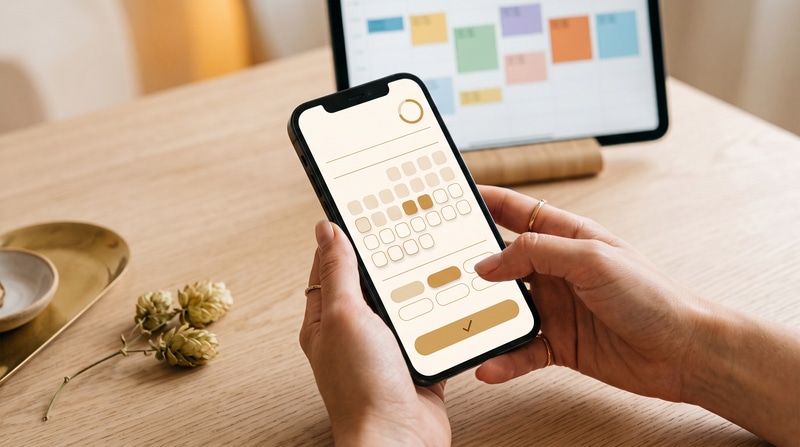
A guest's first contact with the spa rarely happens at the door any more; it happens online. The booking system is therefore one of the most important pieces of technology in the entire operation. A well-built digital booking flow lets a guest choose a date, a specific room, an add-on massage or a gift voucher in a matter of minutes, whenever it suits them - on a lunch break at noon or in bed at night.
For the operator, online booking pays off on several fronts. The system tracks the occupancy of each room automatically, so there are no double bookings and no empty time slots going to waste. At the same time it gathers valuable intelligence on which services are in most demand, which days draw the strongest interest and how different guest groups behave. That data sharpens staff scheduling and stock planning for ingredients such as Žatec hops, malt and the fresh Petrovické beer we pour in both light and dark.
Gift vouchers are another area where digitalisation makes life easier on both sides. A customer buys the voucher online, the recipient redeems it with no friction, and the system tracks validity and remaining balance on its own. Since gift vouchers make up a significant share of wellness revenue, particularly in the run-up to the holidays, a smooth digital sales process is a direct investment in turnover.
A modern approach considers the whole guest journey - from the first click through a pre-visit reminder to follow-up communication afterwards. Automated reminders cut the number of no-shows, and personalised offers nudge guests toward a return visit. To book a visit or ask about a specific service, use our contact form. And if you would like more on wellness and spa topics, our blog is worth a browse, where we regularly share practical tips and a look behind the scenes.
Data as the foundation of sound decisions
The single biggest shift technology brings to the spa business is the ability to work with data. Where an operator once relied on instinct and experience, decisions can now rest on concrete numbers. How many guests came on a given day, what the average spend was, which rooms book most often, how much raw material a single bath consumes - collected systematically, all of this paints an accurate picture of the health of the business.
Occupancy data helps optimise pricing. An operator can offer keener rates in traditionally quiet windows and make sure there are enough staff on hand at peak. Analysing repeat visits reveals which guests come back and why, which is the bedrock of building lasting relationships. Tracking ingredient use exposes where waste creeps in and where savings are possible without touching the quality of the experience.
For investors and owners, this data transparency is exceptionally valuable. It allows the return on each decision to be measured and future planning to proceed with far greater confidence. If you are weighing entry into the wellness sector as an investor, an operation's ability to produce clear performance data is one of the factors that separates a professional project from an amateur venture. That is why we share the financial model for our project individually on request through the franchise section.
It is worth stressing, though, that data on its own solves nothing. What matters is reading it correctly and being willing to act on it. The best wellness operations pair hard numbers with a feel for atmosphere and the human dimension of service. Technology supplies the evidence, but the final call on how to create an unforgettable experience stays with people. It is precisely in that balance between data and craft that the secret of enduring spa success lies.
Technology as the backbone of franchise growth
When a spa brand sets out to grow and open further locations, technology stops being a mere operational aid and becomes the strategic foundation of the entire expansion. A single digital system across every site guarantees that a guest receives service of the same quality no matter which location they visit. That consistency is what builds trust in the brand and marks a professional network apart from a scatter of independent operators.
A standardised technology package makes opening new sites dramatically simpler. A new partner does not have to design a booking system, temperature control or a data-collection method from scratch - they inherit a proven infrastructure that already works. That shortens the time needed to get up and running and reduces the risk of early mistakes. In our franchise model, handing over the complete know-how - including the technological procedures refined in the Prague operation since 2007 - is a core part of the partnership.
Centralised oversight also lets the franchisor monitor quality across the whole network and catch problems early. Data from individual sites can be compared, best practice shared and good solutions rolled out network-wide. For investors, that means greater predictability and firmer control over the return on capital, because the technology delivers an objective read on how each site is performing.
That said, technology alone is not enough. The franchise model rests on the combination of a proven concept, a strong brand, quality ingredients and well-designed infrastructure. The minimum space requirement for a new partner is 150 sq m, which leaves ample room to build an authentic spa environment. Anyone interested in partnering with us or in learning more about the technological setup is welcome to reach out through our contact page and arrange a no-obligation consultation.
The balance between technology and atmosphere
For all the praise technology deserves, one thing must stay front of mind: people do not come to a spa for sensors and data dashboards. They come for calm, for quiet, for warmth, for a break from a hurried world otherwise crammed with screens and notifications. Technology in the modern spa therefore has to be invisible. Its success is measured, in fact, by whether the guest notices it at all.
There is a real risk that an operator gets so carried away by what technology can do that they lose sight of what the service is actually for. Cluttered digital control panels, pushy apps demanding constant attention or screens that puncture the mood tend to spoil the experience rather than improve it. At Lázně Pramen we apply a simple rule: technology belongs backstage, atmosphere out front. The guest takes in the low light, the scent of hops and the taste of fresh beer - not the infrastructure that makes it all possible.
Some spaces deserve special mention, those where technology recedes entirely into the background. Our salt cave Safírový pramen, which we use for massages, is a place built above all around sensory experience and the touch of human hands. Technology is not absent even here - climate control and bookings run digitally - but during the treatment itself the guest is aware only of calm and care. That is the ideal we pursue in every room.
Digitalisation should serve the experience, not stand in for it. The best technology in wellness is the kind a guest never notices: its job is not to impress but to quietly make sure everything works, so the guest can give themselves over to the rest.
This is exactly the approach - technology in the service of people, not the other way round - that we consider the key to the lasting success of any modern spa operation.
Where the future of smart spas is heading
Technology in the wellness sector is far from finished evolving, and the coming years are likely to bring further compelling possibilities. Artificial intelligence is gradually becoming a tool capable of drawing sharper demand forecasts from collected data, optimising energy use even more efficiently and personalising offers for individual guests. Even so, the core of the spa experience - the physical bath, the human touch, the quiet - remains something no algorithm will ever replace.
A growing emphasis on sustainability will shape spa technology ever more forcefully. Managing water and energy consumption, recovering heat from the baths, using ingredients intelligently - all of this is becoming not just a matter of cost but of social responsibility and guest expectation. An operation that can transparently document its light footprint gains a competitive edge, because a rising share of customers now factor sustainability into the services they choose.
Another trend is the deeper integration of the health and wellness dimension. In future, data on guest preferences and responses could help tailor treatments more precisely to individual needs, always with full respect for privacy and data protection. The core of the offer stays exactly as it was: a warm bath, quiet, and time to yourself.
For anyone contemplating entry into this promising sector, the message holds: technology will play an ever more important role - but always as support, never as a substitute for the authentic experience. At Lázně Pramen we pair a tradition reaching back to 2007 with a modern technological backbone, and we offer this proven concept further through our franchise model. If you want to see exactly how technology and tested procedures work in practice, and what opportunities await investors, do get in touch. We will gladly show you what a modern spa looks like - one that respects both innovation and the timeless value of human calm.
Sources
- Global Wellness Institute - research on the wellness industry and its trends - globalwellnessinstitute.org
- McKinsey & Company - the future of wellness and the role of technology - www.mckinsey.com